

Edit: Swim goggles should work too if you don’t have to worry about glasses.
I know this will be obvious to some, but I’ve never seen anyone in my family wear them. It’s so obvious once you think about it, and yet I’d wager most people (especially ones who don’t cook as a hobby) have never tried this.
The reason you cry is because slicing onions produces an organosulfur called syn-Propanethial-S-oxide. Lab goggles – as designed – keep the chemical irritant from reaching your eyes. I’ve used them hundreds of times now, and I think there was one time it got into my eyes when I didn’t have the goggles situated right (not difficult; I was just being a moron).
My 3M anti-fog pair were about $5 USD when I got them, and it looks like they’re about $7.50 USD now. For that price, I never have to dread cutting up onions again. It’s not magic; it’s just basic PPE, and it works. You can even wear them over eyeglasses (I’m sure some huge, circular frames won’t fit, but most should).
Even if you forget them and remember them midway through slicing, it can still help somewhat. So even if you’re as absent-minded as I am, you can benefit from trying this.
These (below) were the ones I got personally, but feel free to try what you already have if you already have a pair on-hand for e.g. cleaning. I’d assume the important thing is just that they’re goggles, not glasses.
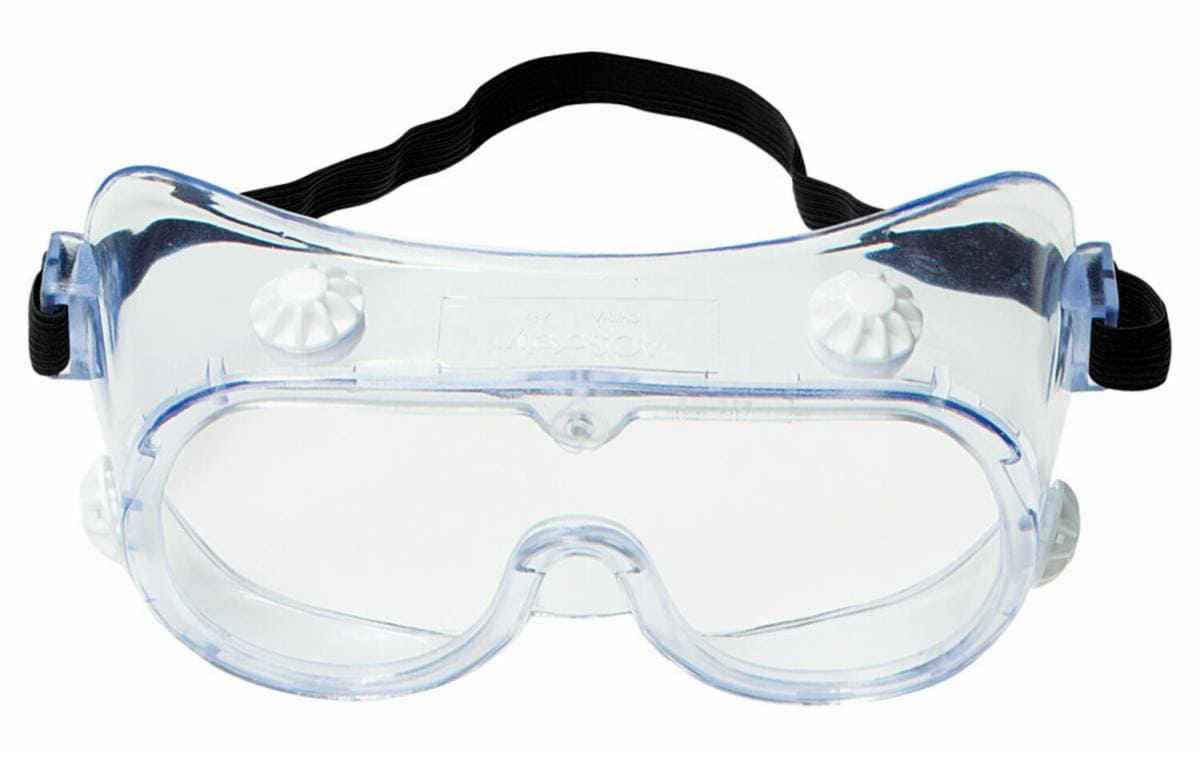
Why YSK: owie, oof, ouchie, my eyes. Cooking is just DIY organic chemistry.
Use a sharp knife because a duller knife is less safe, and it does more smashing than cutting which casues more fumes.
Don’t put your head over the onions as you work. Take a half step back and extend your arms more so you’re further away from the fumes.
If your kitchen is not well ventilated, put your cutting board on the stove and turn on the hood.
Don’t cut the root off either. Use it to hold the onion together and in my experience also seems to lessen the effect on my eyes.
You waste so much onion that way though
I cut it in half and slice off a much as I need then put the rest in a snapware in the fridge. Eventually it all gets used. I’ve had onions last for weeks doing this. No crying either.
That makes sense, and is what I do. I would call this “cut off the root last” instead of “don’t cut off the root.”
For me the biggest factor is the age of the onion, which can be quite aged before it reaches you the consumer, especially with recovered produce.
You don’t, it actually works really well unless the onion has already started breaking down and is “juicy.”
If you want to use as much of the onion as possible, just slice across normal until you get down to the small core section near the root. Then rotate and make a couple slices to separate the core then chop the slices.
The onion around the core tends to be the tougher bits so tossing it isn’t a generaly a big deal but that’s how you recover all the good parts.
I guess it depends on how much you leave behind. No different for me.
Yeah, I cut the root to a nub, just enough to essentially clean the bottom, but not enough for the onion to fall apart. But same as you: whatever I don’t finish lasts over a week, and I chop up everything that remains and use all of it.
This is true. (re: droplets; study also rejects the popular chilling method). People in my experience don’t understand how much safer a sharp knife is until you put one in their hands and get them to just try it.
Otherwise, though, the “fume hood” approach seems extremely excessive when a cheap, comfortable, unobstructive pair of goggles is likely to work more consistently and with less thought. I merrily chop with my cutting board wherever I want and standing however I want.
A sharp knife is something you should be using regardless, but these other methods like meticulous posture, fume hoods, pre-soaking, etc. all seem more convoluted and varying degrees of less effective than grabbing some goggles from a drawer and putting them on your face.